Ferranti Pegasus
My first introduction to computer programming came in the Summer of 1961. I was working at the Pilkington Glass Research Labs in Lancashire
as the industry training part of my first year at college.
One day, the office manager passed a programming manual to me, saying "Mike, you might find this interesting.".
I did! And I starting writing
a program to do the regression analysis processes we had up to then been doing on Monroe electro-mechanical calculators. The computer in question was
a Ferranti Pegasus which was in London. Once a week, two senior guys from the office would travel to London to test our programs, come back
with the results, and we would continue writing and correcting errors ready for the next week's visit.
Univac
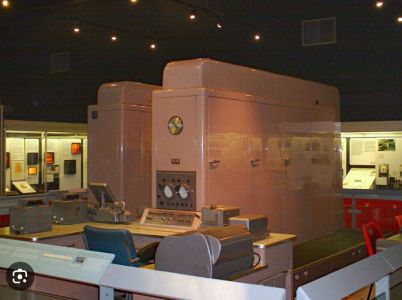
In December 1961, I joined a start-up computer bureau enterprise in Birmingham, as a programmer. The computer was a Univac SS80 -
the SS standing for "Solid State"! It actually used some transistors as well as valves!
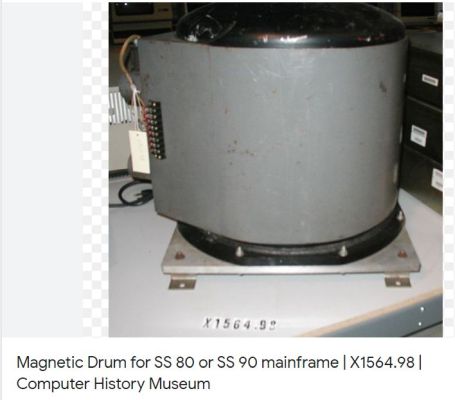
The memory consisted of 4000 4-bit nybbles located on a physically rotating drum. 3000 nybbles had one read-write head per revolution,
and the remaining 1000 were in the "fast access" section, with four read-write heads per revolution!
Programs had to be written in such a way so that the next instruction was under the read head at the correct interval after the
previous instruction, otherwise the drum might have to do a full revolution before accessing the next instruction, thus making your
program run EXTREMELY slowly!
Honeywell
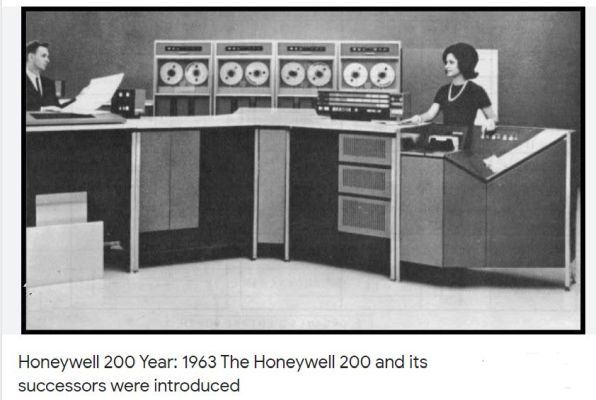
In December 1964 I moved to London and starting working for Honeywell Controls in the Software Support office. This involved programming both in Assembler and in Cobol on the Honeywell H200 computer
Ireland
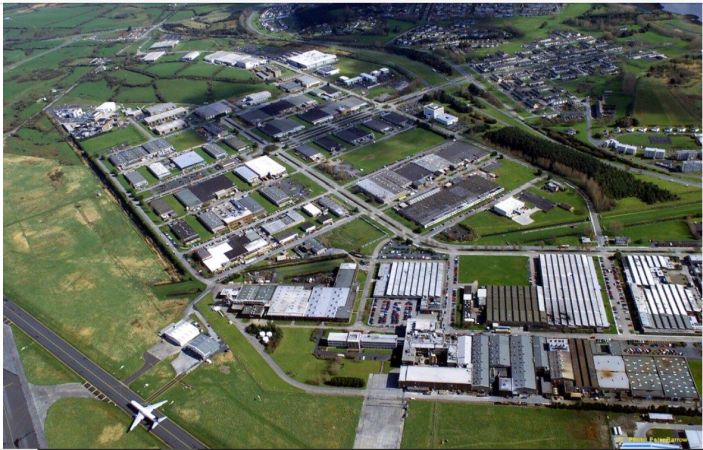
In December 1967, I was approached by one of the directors of Computer Services (Birmingham), asking me to work for them again, this time in Shannon, Republic of Ireland, where they had started a new computer bureau. I joined them as Chief Programmer, and worked at the Shannon site for over three years, until April 1971.
London
In April 1971, I moved to London with the same firm (now part of an American outfit, University Computing Company (UCC). I was based in
Euston, London, as "European Cobol Cosultant" in which role I ran tuition courses for the likes of Rolls Royce and The Forrestry Commision.
This was not a happy period for me, and after just one year I left and joined SCICON - the computer consultancy arm of BP. Their office was in
Berner's Street, central London.
One project from that time was the installation of a mini-computer and associated software at the offices of Canda International near Portsmouth.
Parker Pen
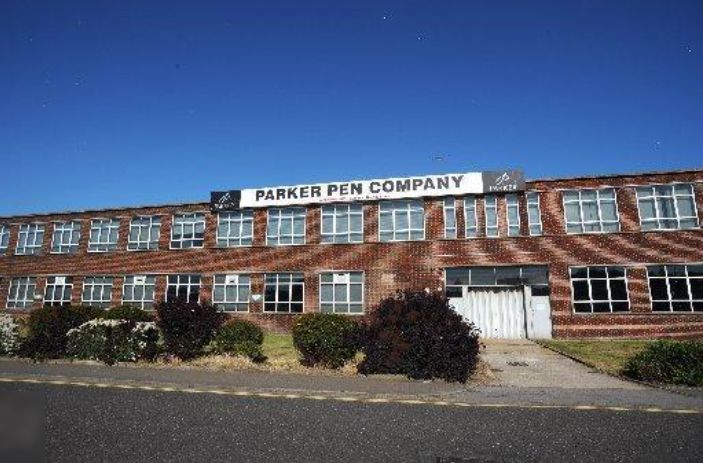
By 1974, I had had quite enough of London, and looked for an escape. This came in the form of a contract employment via an agency, with
the Parker Pen Company, in Newhaven, East Sussex.
This started a much happier time, and when my short agency-arranged contract ended after four and a half months, I arranged to stay on
at Parker Pen still on a contract basis for about 4 years, then going on the payroll for about four years until 1983.
Microprocessors
About half way through my time at Parker Pen, I was asked to provide some help to another department, who had started using
a microcomputer designed by Acorn Computers of Cambridge. This was a rack based system with a 6502 processor, the Acorn System 1.
I enjoyed getting involved with this, and thought it would be fun to buy a system for myself that I could play around with at home.
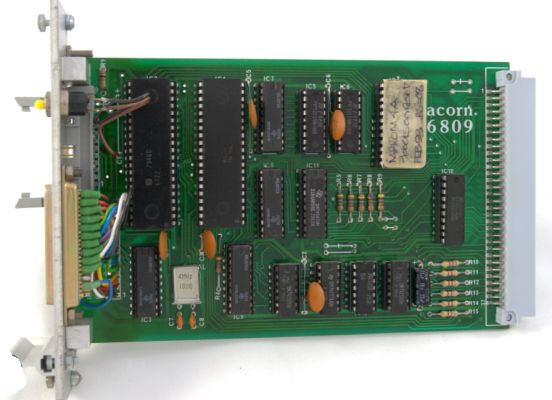
In 1980, Acorn Computers developed a board for their System 3 using the Motorola 6809, and I liked the look of this processer and so I
acquired a System 3 for myself. This was capable of running the Flex operating system,
but I was limited to a very primitive form of the equipment and there was very little support for developing software for it.
So I wrote my own Editor-Assembler for the 6809 version of the Acorn System 3.
Chris Curry went on to develop the Acorn Atom and BBC Micro computers along with the other joint founders of Acorn Computers, Hermann Hauser and Andy Hopper
Dragon
Then in August 1982, Dragon Data Ltd produced the Dragon 32 home computer, also based on the Motorola 6809 processor.
It came with a Basic interpreter, but no support for Assembler programming. I adapted my Acorn 6809 Editor-Assembler for the Dragon 32,
and offered it to Dragon Data.
I was invited to their offices in South Wales, where I was advised that the company were looking at two Assembler systems for the Dragon,
mine, and one from another supplier, possibly J.Morrison Micros, if I remember correctly. Fortunately for me, my system, DREAM, was chosen.
The other supplier was quite disappointed, as they felt that all along that their system would be accepted.
I then developed the disassembler / debugger DREAMBUG to go with DREAM, and the 2 components together were known as ALLDREAM.
I received quarterly royalties from Dragon Data until they went bust some 18 months later, after which I developed DOSDREAM,
which combined ALLDREAM with a version of the Disk Operating System with numerous bugs of the latter sorted out.
Amateur Radio Software
I used ALLDREAM and my cross-assembler (by then running on an Epson PC) to develop quite a range of software for Amateur Radio use,
covering Morse Code (CW), Radio Teleprinter (RTTY),
Amtor and Packet Radio (AX25) and I sold these via mail order to customers all around the world until the mid 1990s.
More Motorola 6809
During the 1990's I worked on some embedded systems which were using the 6809, for Computer Security Ltd., later part of Racal then Thales.
Initially I developed a version of my 6809 cross assembler for Computer Security, to enable them to move a substantial amount of code from
a 6809-based mini computer to IBM PCs.
Later, in the mid 1990's I did more 6809 based work for the same company, this time developing encryption/decryption devices that
were built into FAX machines.
The 6809 has been good to me!
Vehicle Tracking
In the mid-1980's I had developed a "Packet Radio" system for Amateur Radio use, based on the X25 communications protocol.
My neighbour was the director of a company that
was looking for a system to send text messages over the mobile phone network (these were the early days before SMS messaging.).
I demonstrated my packet radio system to him, which worked well over
the mobile network. Arising from this, the company landed a contract to supply the communications software for a vehicle tracking system, in conjunction
with Trimble Navigation of Sunnyvale, California. I had two trips to California in the early 90's to help install the system for an ambulance service
operating in the San Fransisco Bay area.
Subsequently the software was used in vehicle tracking for Police, Ambulance and Fire services in 60 cities in the USA.
Millenium Bug
From early 1997 to late 1999 I polished up my rusty Cobol skills to work on the Millenium Bug for London and Edinburgh Insurance in Worthing. This involved adjusting literally hundreds of old Cobol programs that had been built to process 2-digit years. For example, without the adjustments, the year 2000 (storesd in the computer as 00) would be treated as year 1900, playing havoc with anything like peoples' age calculations etc!
Yet More Motorola 6809
In early 2000, I again was employed by Computer Security Ltd. (now known as Racal Computer Security). The task was to find a way of replacing
many, many legacy 6809 systems with a more modern plarform (Motorola 68000). I was sent to Pennsylvania to pick the brains of the guy who
had developed most of the software for the company's Host Security Module, a system used all around the world for very high security communication
between banks and at inter-governmental level. My research led me into suggesting the development of a 68000-based emulator of the 6809. This
read the 6809 machine code, interpreted it, and performed the equivalant on the 68000. Despite this laborious approach,
the new system worked MUCH faster than the original 6809 code, due to the 68000's 16/32 bit architecture and higher clocking speeds,
such that we were obliged to insert delay loops to avoid letting the legacy 6809 systems look too primitive in comparison!
The conversion from 6809 to 68000 platform then became relatively trivial, as the programmed 6809 ROMs were read
directly by the 68000, thus avoiding the need to re-write the hundreds of variations of 6809 code that were in existance.
The emulator took off and was very widely and successfully used.
Computer Doctor
By late 2002, my prospects of further work using my skills such as Cobol and 6809 Assembler had come to an end! I set myself up as "Computer Doctor" advertisng in Yellow Pages etc., and helped many private individuals as well as a few Companies / Organisations (such as People Matter in Eastbourne) with education, bug fixing, and software and hardware upgrades on IBM PC's. I continued with this until receiving my State Retirement Pension from July 2007.